Histoire
17 juillet 2026
Hope in Action: How Food, Nutrition and Cash Assistance Are Transforming Lives in Cameroon
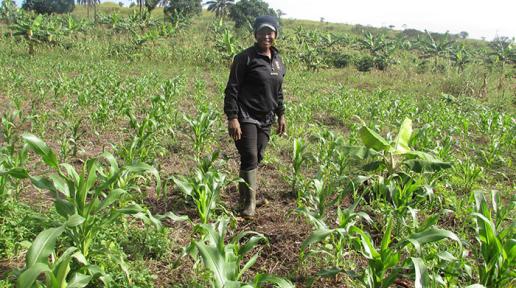
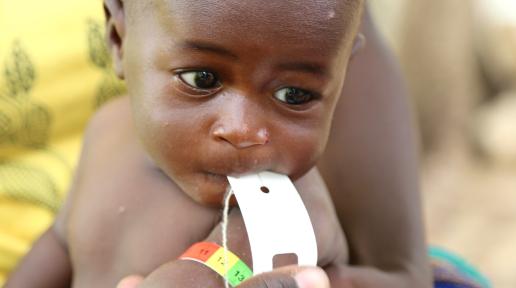
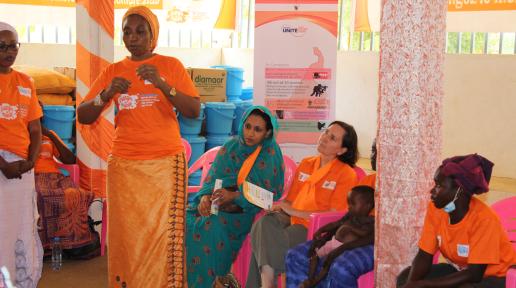
For Dougje Aline, hope sounds like the laughter of a child.Today, her youngest son runs around the family compound in Guirdi village, playing with his brothers and sisters. Just a few months ago, the future looked very different.The mother of five watched helplessly as her 11-month-old son became weaker and weaker. He lost weight, fell sick repeatedly, and struggled to grow.Like many parents in her community, Aline and her neighbours had limited information about child nutrition."Some people believed these illnesses were caused by curses or bad spirits," she recalls. "We did not know that malnutrition was often the real cause."Her family's experience reflects a much broader challenge facing vulnerable communities across Cameroon. Today, nearly 2.9 million people face acute food insecurity, while nearly 400,000 children aged 6 –59 months are facing or expected to face acute malnutrition, leaving countless families vulnerable to hunger, disease and the loss of livelihoods.When community health workers supported by the World Food Programme (WFP) arrived in Guirdi to screen children, Aline finally found answers.Her son was diagnosed with severe acute malnutrition and immediately referred for treatment.With specialized care and nutritional support, including Super Cereal, his health gradually improved. At the same time, Aline participated in community awareness sessions where she learned about breastfeeding, hygiene, child feeding practices, and ways to prepare nutritious meals using locally available foods."I learned what malnutrition is, its consequences and how to prepare nutritious meals," she says. "Nobody had explained these things to us before."Now healthy and active, Aline's son is one of 99,350 children supported through WFP nutrition programmes across Cameroon, interventions that help prevent, detect and treat malnutrition before it becomes life-threatening."My child is alive today because someone came to our village and helped us understand what we did not know."While nutrition support is helping save lives, WFP is also transforming how assistance reaches vulnerable communities.In Kolofata, where Aline lives, families are among the first in Cameroon to benefit from the country's inaugural SCOPE In-Kind pilot, supported by Sweden and implemented by INTERSOS. Using WFP's digital beneficiary and transfer management platform, the pilot is digitizing the entire food assistance process and strengthening accountability, transparency, and efficiency from registration to distribution. The initiative aims to reach 5,300 beneficiaries across 884 households. So far, 4,70 beneficiaries from 780 households have been biometrically registered, representing approximately 90 percent of the targeted caseload, while the pilot has already achieved an impressive 98.5 percent redemption rate. These results help demonstrate how digital solutions can strengthen humanitarian assistance while improving beneficiaries' experience and confidence in the distribution process. The importance of timely assistance extends beyond nutrition.Just a few hours away in Makary, Hadja Halilou knows how quickly a family can lose everything.After losing her husband and later fleeing insecurity in Darak, the 38-year-old mother of four left behind her home, farmland and source of income."I woke up every morning with the same worry: how would I feed my children before the end of the day?"Like 2.2 million displaced and vulnerable people across Cameroon, Hadja found herself struggling to meet even her family's most basic needs.Through a WFP-supported cash assistance programme implemented by INTERSOS, she began receiving transfers that allowed her to purchase food directly from local markets and prioritize the needs of her household."When I started receiving cash transfers, I felt enormous relief. For the first time in a long time, I could decide what my family needed most."The support helped her buy staple foods and improve her family's diet, but it also gave her an opportunity to rebuild.After covering immediate needs, Hadja invested part of the assistance in a small groundnut-selling business.The activity now generates additional income, helps support her household, and contributes to keeping her children in school."It gave me back my dignity. I was no longer simply receiving assistance. I was rebuilding my life."Her story reflects the wider impact of cash-based assistance reaching 129,500 people across Cameroon, helping vulnerable households meet urgent food needs while supporting local markets and creating opportunities for recovery and self-reliance. For Gianluca Ferrera, WFP Representative and Country Director in Cameroon, stories like Aline's and Hadja's demonstrate why humanitarian assistance must go beyond emergency response."Behind every statistic is a person, a family and a future. When a child recovers from malnutrition, when a mother can feed her family and when households begin rebuilding their livelihoods, we see the true impact of humanitarian assistance."The support that changed the lives of Aline and Hadja is part of a much larger effort across the country. Between January and May 2026, WFP reached over 305,000 people with food assistance, enabled 129,500 vulnerable people to access cash-based support, and provided nutritional assistance to 136,950 women and children, helping families protect their health, livelihoods and futures.Yet needs continue to outpace available resources.With 2.9 million people still facing acute food insecurity across Cameroon, humanitarian pressures are expected to remain high throughout 2026. Continued support is therefore essential to sustain gains already achieved and prevent vulnerable households from slipping deeper into crisis.To maintain life-saving food assistance, nutrition services, cash-based transfers and innovations such as the SCOPE In-Kind pilot through December 2026, WFP requires an additional USD 44.5 million.Without timely funding, many vulnerable families could lose access to the support that is helping them protect their children, recover their livelihoods, and move beyond survival.For Aline, that support means seeing a healthy child running across her courtyard.For Hadja, it means watching her children go to school each morning while her small business continues to grow.For thousands of families across Cameroon, it means something equally important: the chance not only to overcome today's challenges, but to look to the future with confidence and hope.