Lighting the future: Millitius’s path through crisis, hunger, and hope
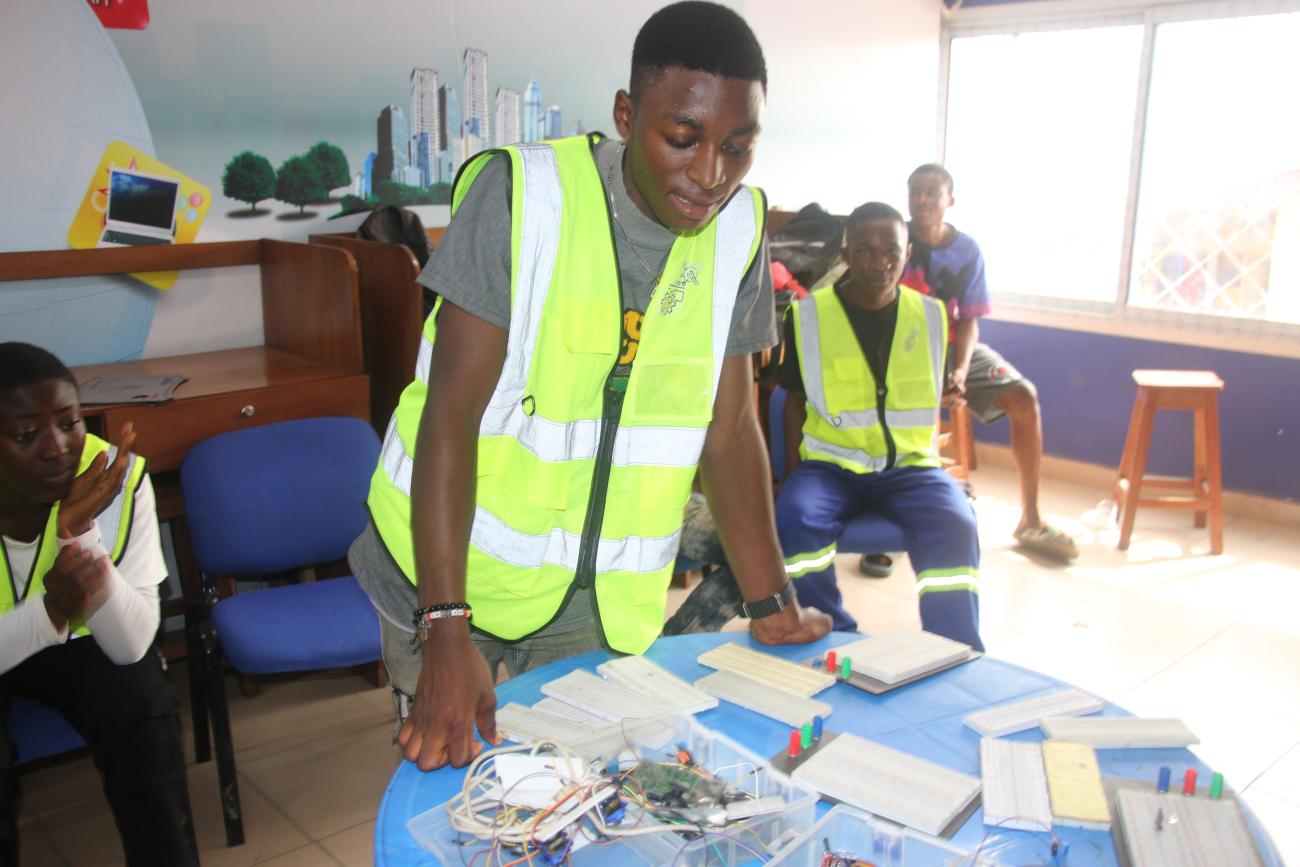
Millitius’s journey is a powerful testimony of resilience, hope, and the impact of timely support.
What would have become of Millitius without education or school feeding? No one can say for sure. But one thing is certain: his relentless quest for knowledge and the desire to be food secure changed his life. From a peaceful childhood to the harsh realities of displacement, Millitius’s journey is a powerful testimony of resilience, hope, and the impact of timely support.
Millitius grew up in Kumbo, the second largest city in Cameroon’s Northwest region, a place known for its hilly landscapes and serene environment. Life was merry. He lived with his mother, Mary, a dedicated teacher who always prepared his favorite dish: fufu (corn flour) and njama njama (huckleberry). With his eight siblings having moved out, Millitius was the only child at home, showered with attention and dreams for a bright future.
But his life took a sharp turn in 2016 when violent conflict erupted between non-state armed groups and state security forces. At just nine years old, Millitius was in Class 6, eagerly preparing for his First School Leaving Certificate at Government Primary School Mah, where his mother also taught. The conflict, which many believed would end quickly, dragged on, crushing his dreams and forcing him to drop out of school.
“My mother lost her job, and we struggled to survive. Sometimes, we hid in the forest for weeks with barely any food,” Millitius recalls.
With no stable income, Mary resorted to menial jobs to support her son. But the escalating conflict often drove them into hiding. They would sleep on the bare ground, relying on meagre belongings and the hope of better days.
In 2019, Millitius’s life began to change. At 13, he relocated to Buea in the Southwest region, supported by his elder brother, a 25-year-old carpenter who, despite limited means, welcomed the responsibility of becoming his guardian.
“He had never imagined being my provider, but he sacrificed everything to send me back to school,” Millitius says.
His brother managed to raise 80,000 FCFA and enrolled him in St Charles Lwanga Primary School, popularly known as Catholic School (C.S.) Molyko, during the second term. Having missed nearly five years of school, Millitius had to restart Class 6. He was the oldest in the class, struggling to catch up. But he had three kind classmates who supported him through it all.
Everything changed when the World Food Programme (WFP) launched its school feeding programme at C.S. Molyko. Students received High Energy Biscuits during break and take-home rice rations to cook and share with their families.
“Those biscuits filled us up instantly. I no longer felt hungry in class. I could concentrate and do well in my studies. My brother didn’t have to give me lunch money anymore, and we saved more,” Millitius shares.
Thanks to this support, Millitius excelled in school. Today, at 18, he is in Form 5, studying Electronics at Government Technical High School Molyko. He continues to live under the care of his now 30-year-old brother, who still pays for his education.
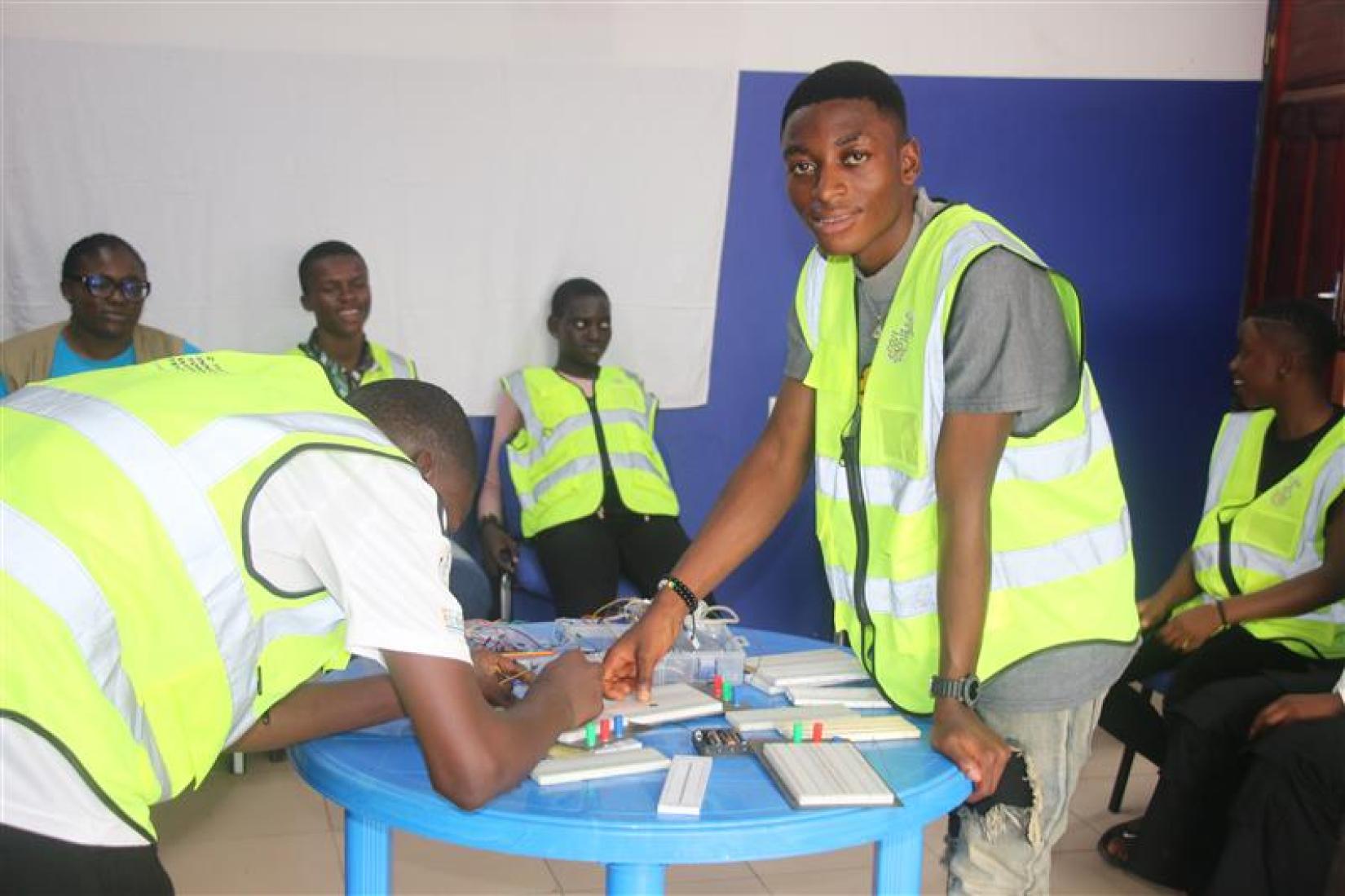
Recently, Millitius completed a one-month internship through a WFP partner organization, Hope for Africa, where he received a certificate of honor. With his newfound skills, he dreams of a brighter future.
“I play piano at church, but my dream is to electrify Buea. My friends and I want to start a business to install traffic lights across the city,” he says with conviction.
Millitius’s story is not unique. Since 2013, Cameroon has faced multiple humanitarian crises, affecting education and food security for countless children. Recognizing the urgent need, WFP and the Ministry of Basic Education (MINEDUB) signed a Memorandum of Understanding in 2023 to support the government's plan to reach 1 million children with hot meals by 2025.
“WFP didn’t just build school canteens; they made sure hot meals were provided to our pupils starting in 2024. This has transformed the learning experience,” says Dr. Lingondo Joseph Mwambo, Regional Pedagogic Inspector of Basic Education for the Southwest.
Millitius’s story is a shining example of what’s possible when education and nutrition come together. With the right support, even the most disrupted childhoods can lead to promising futures.


UN entities involved in this initiative
Goals we are supporting through this initiative