Histoire
08 septembre 2026
At COP17 in Mongolia, Cameroon’s UN Resident Coordinator makes the case for financing land restoration and food systems
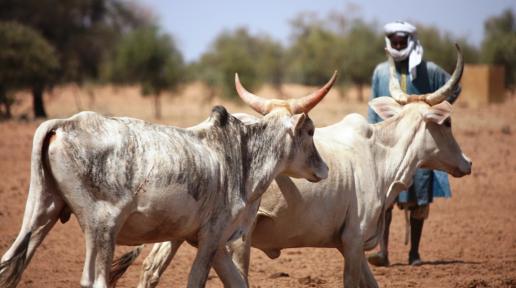
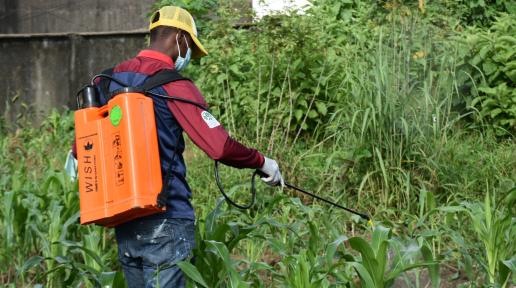
For farmers, herders and rural communities across Cameroon, degraded land is not an abstract environmental concern. It can affect harvests, incomes, access to water and grazing land, and the ability of communities to withstand climate shocks.Issa Sanogo, the United Nations Resident Coordinator in Cameroon, took that reality to Ulaanbaatar, Mongolia, in the last week of August, setting out an idea Cameroon is already putting into practice at home: restoring degraded land, producing enough food and adapting to climate change are one task, not three.Mr. Sanogo was attending the 17th Conference of the Parties (COP17) to the UN Convention to Combat Desertification (UNCCD), the treaty on land degradation, drought and desertification. He was one of three Resident Coordinators mobilized by the UN Development Coordination Office, alongside Jaap van Hierden (Mongolia) and Karl-Frédérick Paul (The Gambia). Between 23 and 28 August, he took part in around a dozen engagements, including high-level dialogues of the Global Flagship Initiative on food security, a roundtable on livestock herding, resilience and peace, and working sessions with development banks.He worked alongside a national delegation headed by the Ministry of Environment, Nature Protection and Sustainable Development. The Government led discussions on practical solutions to land degradation and drought, presenting its work to restore degraded landscapes, strengthen food production and build resilience in vulnerable communities as an example of how global commitments under the UNCCD can be translated into concrete action at national level. Mr. Sanogo carried those messages further, into discussions with UN partners, development banks and international financial institutions.One agenda, not threeIn every setting, Mr. Sanogo returned to the same argument. Food security, soil health, land restoration and climate action cannot, in his view, be handled as separate problems by separate institutions.“A farmer with exhausted soil, a herder whose pasture has disappeared and a village that has lost its harvest are facing the same problem,” he said. “If we answer with three separate programmes, we get three partial answers. In Cameroon we are choosing to answer with one. That means planning and financing our responses to land, food and climate together, not ministry by ministry.”Resilience to climate shocks, he stressed, depends on food systems that both protect natural resources and create economic opportunities. His example was “ConvergeFood,” a programme supported by the Global Flagship Initiative and aligned with Cameroon’s National Development Strategy 2020-2030. It brings ministries, United Nations agencies, private companies, producer organizations and technical and financial partners around a shared vision for transforming Cameroon’s food systems. The approach is the Government’s own. Cameroon has positioned land restoration not only as an environmental objective but also as a pathway to food security, poverty reduction, climate resilience and sustainable development. Herders, farmers and peaceThe roundtable “Pastoralism for Resilience and Peace” turned to the seasonal movement of herders and their cattle, sheep and goats in search of pasture and water. Unmanaged, that movement can set herders and farmers against each other. Cameroon’s experience, Mr. Sanogo explained, shows that it can instead strengthen climate resilience when supported by appropriate governance.“The movement of herders is not the problem in itself. The absence of rules and dialogue around it is,” he told the roundtable. “When herders, farmers and local authorities agree on how pasture and water are managed, where animals can pass and how disputes are settled, when early warning lets us act before tensions rise, and when cooperation extends across the region, that movement becomes an asset for peace instead of a threat to it.”The case for investmentIn the discussions on agricultural investment and food security, Mr. Sanogo presented land restoration as an economic driver as much as an environmental imperative.“Restoring degraded land is an environmental necessity, but it is also an economic decision,” he said. “Every hectare brought back into production means income for families, jobs and more stable communities. It also makes those communities better able to withstand climate shocks. That is the case we are putting to investors.”In working sessions with the African Development Bank and the Islamic Development Bank, he advanced discussions on financing for land restoration, climate resilience, food security, agricultural value chains and job creation. The talks also explored innovative financing mechanisms for the next UN Sustainable Development Cooperation Framework, the plan that will guide United Nations support to Cameroon’s priorities from 2027 to 2031. The Government pressed the same case at Cameroon’s official side event, presenting national achievements, ongoing restoration initiatives and an ambition to restore millions of hectares of degraded land by 2030. The event was also meant to draw in additional technical and financial partners. No single institution can finance or implement this agenda alone. The Resident Coordinator’s role is to connect the Government’s priorities with the expertise of UN entities and the support of development banks, bilateral partners and the private sector. At COP17, that role gave Cameroon’s initiatives greater visibility: land restoration efforts, territorial approaches to climate resilience and ConvergeFood were presented as examples of United Nations agencies working as one. “The commitments exist. What Cameroon needs now is financing and partners ready to turn them into programmes that people can see in their fields, on their pastures and in their markets,” he said. “Land restoration, reforestation and the transformation of our food systems will not happen without that investment. That is what I came to Ulaanbaatar to advance.”After UlaanbaatarThe Government’s active engagement, accompanied by the Resident Coordinator and the UN Country Team, opened conversations with partners interested in supporting Cameroon’s development ambitions.The test lies in the months ahead: whether the talks with the two development banks mature into financed projects, and whether the integrated approach presented at COP17 is reflected in the Cooperation Framework for 2027-2031. Mr. Sanogo has set his own benchmark. “A conference is measured by what happens after it,” he said. “If this mission leads to restored land, stronger food systems, more jobs and fewer conflicts over pasture in Cameroon, then it will have served its purpose. Our responsibility now is to make sure that international commitments reach communities as programmes that deliver lasting benefits.”