Histoire
15 octobre 2026
Cameroon’s SDG Week rallies communities for sustainable development
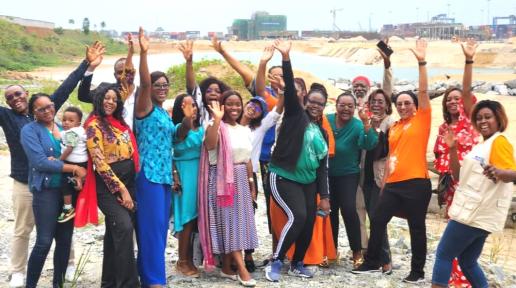
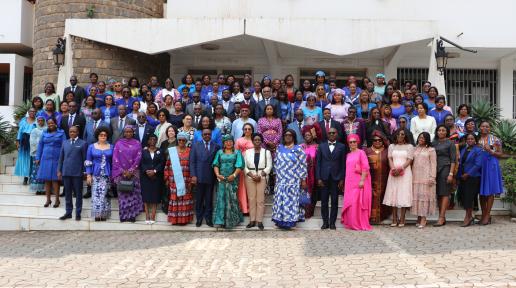
The United Nations and the Government of Cameroon called for stronger partnerships to reach the Sustainable Development Goals (SDGs) by 2030, and for collective action to end gender-based violence, during SDG Week held in Yaoundé between 25 and 26 September.Over two days, an exhibition, public discussions, an awareness walk of around 400 people and a football tournament brought together Government representatives, UN agencies, civil society organizations, NGOs, the private sector, the media, young people and volunteers. The SDGs are the 17 Goals adopted by all UN Member States in 2015 to end poverty, reduce inequality and protect the planet by 2030.The United Nations and the Government of Cameroon called for stronger partnerships to reach the Sustainable Development Goals (SDGs) by 2030, and for collective action to end gender-based violence, during SDG Week held in Yaoundé between 25 and 26 September.Over two days, an exhibition, public discussions, an awareness walk of around 400 people and a football tournament brought together Government representatives, UN agencies, civil society organizations, NGOs, the private sector, the media, young people and volunteers. The SDGs are the 17 Goals adopted by all UN Member States in 2015 to end poverty, reduce inequality and protect the planet by 2030. “With just over four years left, there is no time to lose,” said Issa Sanogo, UN Resident Coordinator in Cameroon, who opened the week. “The Sustainable Development Goals will not be reached by any single institution, and not by the United Nations alone. They will be reached when the Government, civil society, the private sector, the media and young people pull in the same direction. This week showed the energy that already exists in Cameroon, and our shared task is to turn it into lasting results in every community.” Held under the theme “5 Years for SDG Acceleration: Accelerating Action for the Sustainable Development Goals through Partnership, Innovation and Citizen Engagement,” the week gave particular attention to preventing gender-based violence. The organizers presented this as part of sustainable development itself: progress also means communities where women and girls can live in safety and dignity. Bringing the Goals closer to the publicThe week opened on 25 September with an exhibition at Carrefour Playce in Yaoundé, where photographs, videos and information stands presented the work of UN agencies in Cameroon. An exhibition like this one takes the Goals out of meeting rooms and brings them closer to the people they are meant to serve.Mr. Sanogo toured the stands with Marilynn Anding Mvongo, representing the Minister of External Relations, and Nouhoum Sangare, Director of the UN Centre for Human Rights and Democracy in Central Africa, speaking with agencies about their work, challenges and priorities.Games, quizzes and live entertainment invited visitors to learn about the Goals. At a pledge wall displaying all 17 Goals, participants signed their names beside the Goal to which they wished to contribute. A mini conference led by the UN human rights team looked at how young people can contribute to the Goals. Ending gender-based violenceGender-based violence, meaning violence directed at a person because of their gender, disproportionally affects women and girls. It was the subject of a public discussion on the first day and of the awareness walk on the second.The discussion brought together Martin Hart-Hansen, Deputy Resident Representative of the UN Development Programme, Raoul Bersha, Country Director of the UN Volunteers programme, and Yvonne Belema Chonga, President of AFIRI. They were joined by representatives of the Ministry of Women’s Empowerment and the Family, activists and young people. Participants linked prevention to four of the Goals: gender equality (SDG 5), reduced inequalities (SDG 10), peace, justice and strong institutions (SDG 16) and partnerships (SDG 17). “Gender-based violence is a violation of human rights, and it also holds back progress on almost every other Goal, from education and health to employment,” said Mr. Hart-Hansen. “When women and girls are not safe, whole communities lose their contribution. Prevention cannot rest on one institution. Families, community leaders, schools, the justice system and the media all have a part to play in making clear that violence is never acceptable.”“Associations like ours are often the first door that survivors knock on, but we cannot respond alone,” said Ms. Chonga. “When civil society, public institutions and the United Nations work together, prevention reaches more people and survivors find help sooner. The young people and activists in this room have shown that they are ready to carry this message into their own communities.” On 26 September, around 400 participants, including UN staff, Government partners, NGOs, civil society organizations and youth groups, walked from Carrefour “J’aime mon pays” to the Yaoundé Military Stadium. Carrying banners and posters, they drew attention to gender-based violence and its consequences for women and for society as a whole. Football for the GoalsThe week ended at the Yaoundé Military Stadium with a football tournament chaired by Mr. Sanogo, which carried the SDG and anti-violence messages to players and spectators. Messages, speeches and SDG cubes placed around the pitch kept the 17 Goals visible, and participants were encouraged to volunteer in their communities. Two matches were played. In the final, the partner “Football for the Goals » Club won the tournament after defeating the UN team, and participants received certificates of participation. The road to 2030 is growing shorter. Cameroon’s SDG Week 2026 offered a simple reminder: every partnership matters, every community has a role, and every action can move the Goals forward. The Goals are reflected in Cameroon’s national development strategy, but they will only succeed if citizens see them as their own.